Estimates with sources, not copied lists
How rare are your eyes, really?
Pick a color. Get its estimated share of the world, its rarity tier and an honest confidence label, checked against 235 million U.S. license records, ophthalmology guidance and genetics research.
No global census of eye color exists, so worldwide figures are published as ranges. Read the methodology before quoting them.
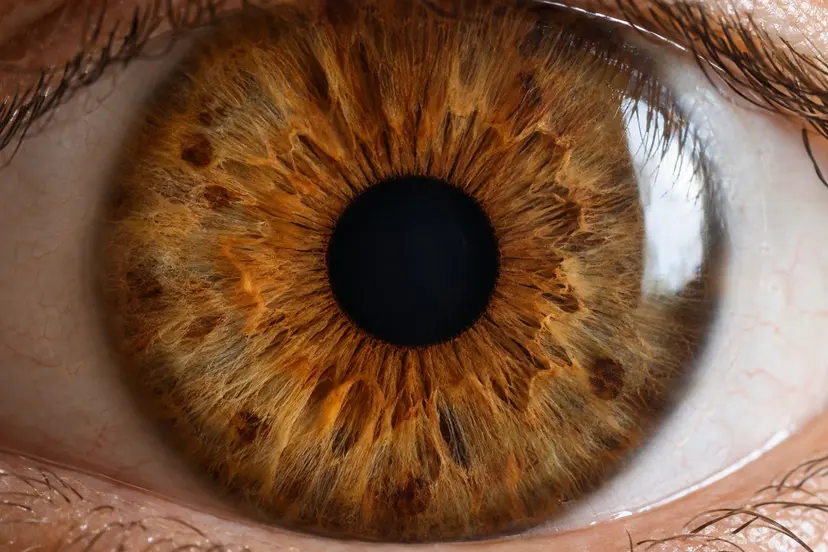
- of the world has brown eyes
- 70–80%
- have green eyes, the rarest color most surveys count
- ~2%
- of 235 million U.S. licenses list gray
- 0.7%
- people have some form of heterochromia
- 1 in 400
01: The tool
Where do your eyes rank?
Choose your eye color, switch between worldwide and U.S. figures, pick a state, and compare any two colors. Each result shows a range, because no eye color statistic is exact.
Eye Color Rarity Tool
Select a color to see its estimated prevalence
Step 1: Choose your eye color
Green eyes: estimated 2 percent of the world population, tier Very rare, confidence moderate.
Green eyes
Very rareof the world population, estimated range 1–4%, roughly 1 in 50 people.
Widely cited as about 2%. Green and hazel blur together in self-reports, so read the range as the real figure.
The rarest of the four colors most surveys track, at around 1 in 50 people worldwide.
Brown eyes are roughly 37.5× more common than green eyes worldwide.
Step 2: See how it compares
Share of world population
Estimated point values, bars drawn to scale
No worldwide census of eye color exists, so every value here is an estimate. The figures do not add up to exactly 100%. Beyond the chart: heterochromia appears in about 1 in 400 people, and red or violet-looking eyes linked to albinism are rarer still.
02: The spectrum
Every eye color, ranked and explained
From near-universal brown to rarely counted gray. Each profile covers the science, the geography and the sources behind the numbers.
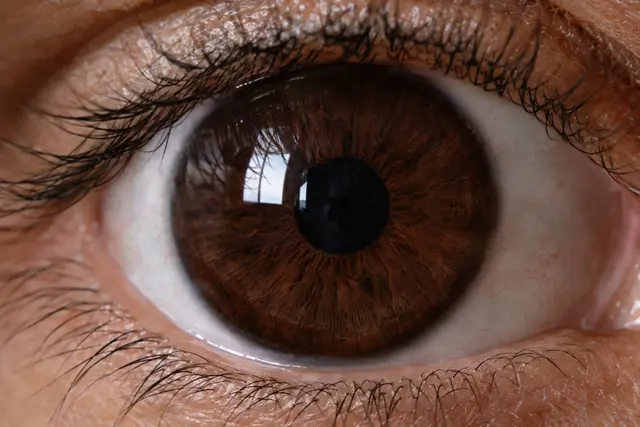
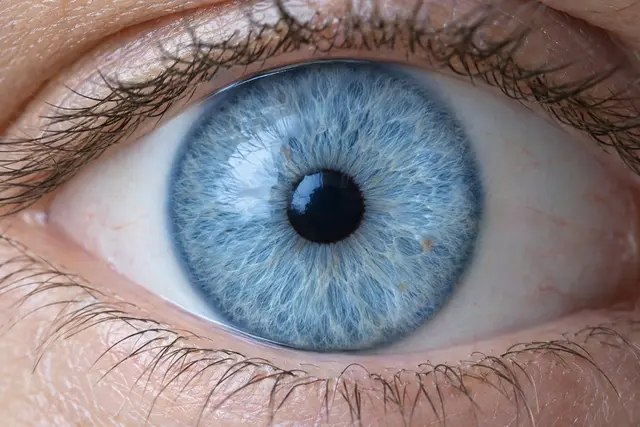
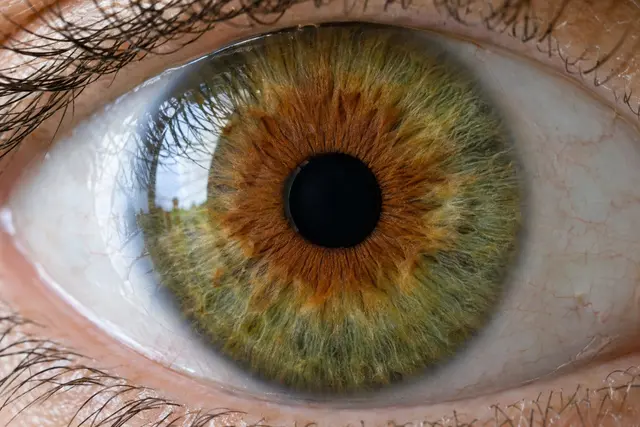
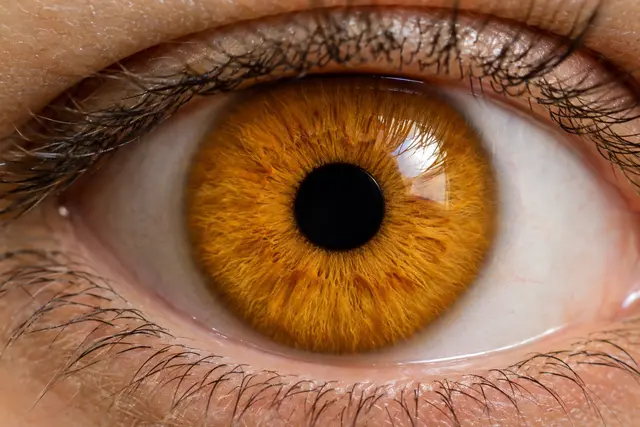
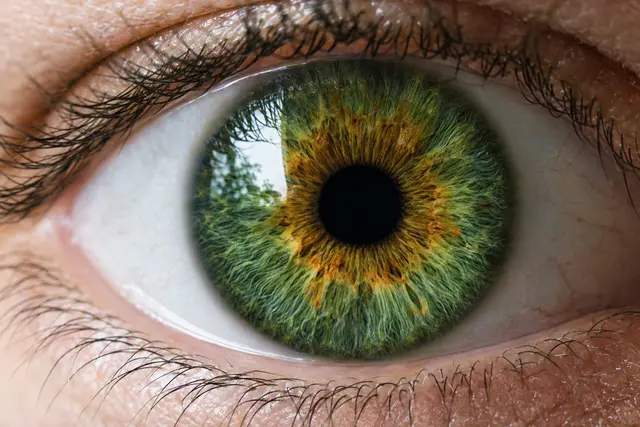
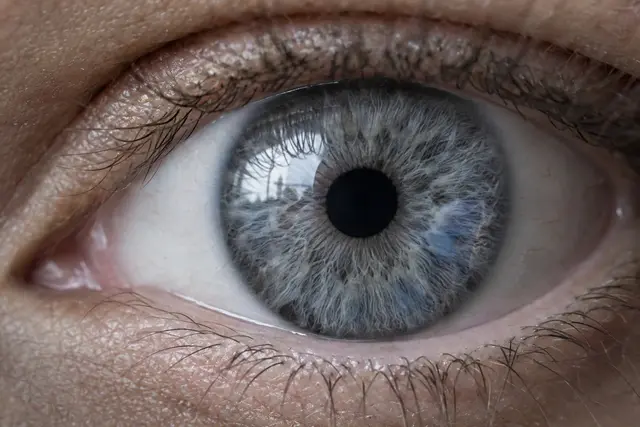
Beyond the standard six: heterochromia and the red or violet look linked to albinism.
Rare variations03: The science
Why eyes have color at all
Three ideas explain every shade you've ever seen, including yours.
Principle 01
Melanin sets the base
Melanin is the raw material of eye color. Lots of it reads brown, and very little reads blue. Most eyes sit somewhere on that continuous scale.
Principle 02
Light does the coloring
Blue eyes contain no blue pigment. With little melanin in the front of the iris, light scatters and the blue end of the spectrum reflects back out, much as it does in the sky.
Principle 03
Dozens of genes tune it
OCA2 and HERC2 do the heavy lifting, but a 2021 study of almost 195,000 people found 61 genomic regions involved. Eye color is a dial, not a switch.
04: Our standard
Most eye color statistics are repeated, not measured. We show the difference.
There is no global eye color census. Surveys disagree, categories blur (hazel and amber, gray and blue), and unsourced numbers get copied until they look like facts. We trace them back and tell you what we find.
Methodology & sources- 01
Ranges, not false precision
Worldwide figures come as a low–high band, plus a labeled central estimate.
- 02
Confidence labels
Every color is graded high, moderate or low, with the reason why.
- 03
Named sources
Peer-reviewed studies, ophthalmology bodies and large datasets, linked on each page.
- 04
Known limitations
Where the data is weak, as it is for amber and gray, the page says so.
05: Questions
Frequently asked questions
Straight answers to the most common questions about eye color, based on the evidence.
What is the rarest eye color?
Green is the usual answer, at about 2% of the world, and it is the rarest of the four colors most surveys count. Gray is probably rarer: it was on 0.7% of 235 million U.S. driver's licenses, against 9% for green. Heterochromia and the red or violet look linked to albinism are rarer still, though they are not standard colors.
What is the most common eye color in the world?
Brown, by a wide margin, at an estimated 70–80% of people. It is also the most common color in the United States, at 53% of license records and 45% in a 2014 Harris Poll.
Are these percentages exact?
No. There is no worldwide census of eye color, so our global figures are estimates published as ranges with a confidence label. The U.S. figures come from real datasets, but those rely on people describing their own eyes. Our methodology page explains the details.
Can eye color change over time?
Yes, especially in childhood, since melanin in the iris builds after birth. Eye color tends to settle by about age 6, though one twin study found noticeable changes in 3.8% to 8.6% of white twins after that. Any sudden or one-sided change should be examined by an eye doctor.
Where do the numbers on this site come from?
U.S. figures come from a 2025 PLOS ONE study of 235 million driver's licenses and a 2014 Harris Poll for the American Academy of Ophthalmology. Genetics comes from peer-reviewed research such as a 2021 Science Advances study of almost 195,000 people. Worldwide figures are estimates based on secondary sources, checked against those direct counts.
06: From the blog
Research notes & guides
Longer reads on rarity, inheritance and identification, with sources listed on every article.
Found a study we missed?
Help us keep the numbers honest.
If you spot an error, know of a new source, or have a question we have not answered, we want to hear it.
Press and researchers: see the methodology page for how to cite Eye Color Rarity.